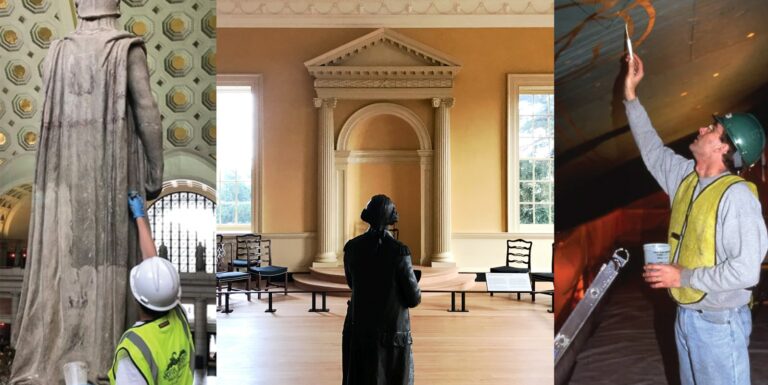


Midway through conserving the decorative paint and fine artwork at the Basilica of the Sacred Heart of Jesus, our team uncovered something remarkable beneath later layers of paint: original decorative designs, still beautifully preserved. It became the largest paint exposure in Canning’s history, revealing all initial artwork and decoration that had been overpainted for more than 60 years. It also reshaped the schedule.
That’s the nature of historic restoration. The building always has more to tell you, and a good timeline leaves room to listen.
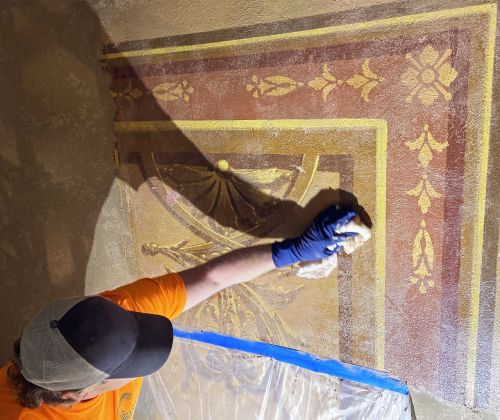
Original decorative designs uncovered during conservation at the Basilica of the Sacred Heart of Jesus.
Whether you’re restoring a state capitol, a church, a library, or a theater, realistic expectations are the foundation of a successful project. Here are six factors that shape every restoration timeline, and how owners, architects, facilities managers, and stakeholders can plan for each.
1. Start With Why
Every restoration begins with a reason, and that reason shapes the entire timeline. Is the building facing urgent damage, like water infiltration or failing plaster? Is there a milestone anniversary or a reopening date to hit? Are you bringing a space back into active use, or preserving a significant interior for future generations?
The answer changes the schedule. Urgent repairs may call for stabilizing the building first and completing the full restoration later in phases. A fixed date means working backward from the deadline to see what is realistic. A project driven by historic significance puts more weight on investigation and documentation up front.
Your reason also points the way to funding. Landmark sites may qualify for federal and state grants, private preservation organizations, community foundations, and historic rehabilitation tax credits. Programs such as the National Park Service’s Save America’s Treasures grants and Connecticut’s Historic Restoration Fund can help offset eligible preservation costs, and specialized funding may be available for religious institutions, museums, and culturally significant properties. Grant applications typically ask you to explain a project’s purpose and significance, so a clear “why” strengthens every application.
The catch: most funding comes with paperwork. Expect documentation requirements, eligibility reviews, matching funds, and firm application deadlines. Identify funding sources early, and you’ll be able to anticipate financial constraints, decide whether the work should be phased, and build a timeline you can actually keep.
2. Investigate Before You Act
One of the most important phases of any restoration happens before work begins. Pre-construction assessments, such as a historic paint analysis, a historic building conditions assessment, or a plaster condition survey, reveal what a building needs and how long it will take to deliver it.
These investigations replace assumptions with evidence. We know clients are eager to get started, but time spent on thorough documentation up front routinely prevents costly revisions and unwelcome surprises later.
3. Source Materials That Aren’t Made Anymore
You can’t order historic materials from a standard supplier. Custom plaster molds, historically accurate pigments, specialty lime products, gold leaf, hand-crafted architectural elements, and conservation-grade materials often carry long lead times, and some must be custom fabricated to match original features.
Sometimes the search gets unusual. When we restored the finishes at the Mellon Auditorium, we needed crushed clam shells, one of the original materials used to improve the sound of the room. Before work could move forward, our team had to test and identify the right materials, ratios, and process. That testing time was built into the schedule from the start, so the restored finishes could perform the way the originals did.
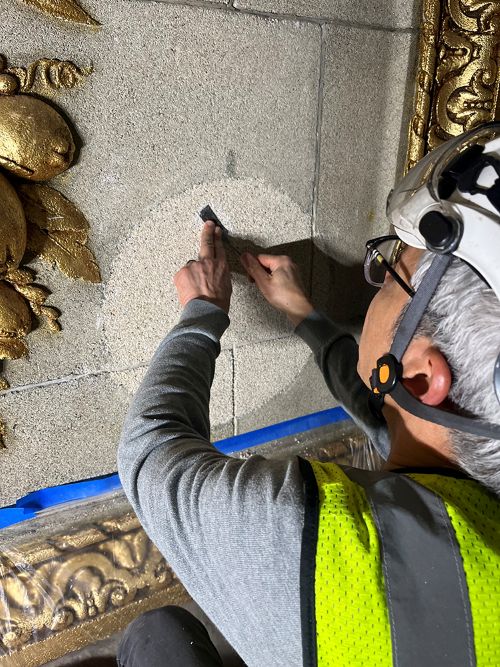
Restoring the Mellon Auditorium’s finishes called for an original ingredient: crushed clam shells.
4. Let the Craft Take Its Time
Historic restoration relies on skilled artisans and conservators whose methods differ significantly from modern construction. Decorative painting, ornamental plaster repair, gilding, wood conservation, mural restoration, and historic finish replication all happen in careful stages. Gold leaf is laid by hand. Lime-based materials need time to cure. Each treatment is tested and reviewed before the next step begins, and none of it can be rushed without compromising the result.
The goal isn’t to make a building look new. It’s to preserve its historic fabric and make sure the restoration lasts.
5. Plan for What the Walls Are Hiding
Even the most thorough investigation can’t see everything. Historic buildings carry decades, sometimes centuries, of modifications, repairs, and environmental wear. Some conditions appear only once finishes come off: hidden water damage, moisture infiltration, structural deterioration, failing substrates, undocumented repairs, or decorative finishes no one knew were there.
These discoveries aren’t delays. They’re an expected part of responsible preservation, and sometimes they’re the best part of the project, as the Basilica showed. The most successful projects build flexibility into the schedule so the team can evaluate and treat what they find without lowering preservation standards.
6. Don’t Forget Approvals, Code, and Logistics
Some of the factors that stretch a timeline have nothing to do with paint or plaster. Before work starts, ask:
- Is full funding in place, or will the project need to be phased?
- Is the building a registered landmark? If so, do changes need approval from a preservation commission?
- Are there code requirements, such as ADA accessibility, that will affect scope, schedule, or budget?
- Is the right team assembled, and how much time is needed for bidding and contracting?
Each answer can add weeks or months. Building them into the schedule early keeps them from becoming surprises later.
Keep Everyone Talking
Restoration is a team effort among owners, architects, preservation consultants, contractors, and specialized trades. Regular, open communication helps the team spot schedule impacts early and make informed decisions together. When everyone understands that quality preservation takes both patience and adaptability, expectations stay aligned and surprises stay small.
Worth the Wait
Restoration schedules can run longer than conventional construction, and for good reason. Taking the time to properly investigate, conserve, and restore historic materials produces a result that is more authentic, more durable, and true to the building’s history. It’s an investment in cultural heritage that will serve generations to come.
Planning a restoration? Start with a conversation. Our team can help you scope pre-construction assessments, explore funding options, and build a timeline grounded in what your building actually needs. Contact us.